
Stephen Thorkildson
Owner, No Place Like Home
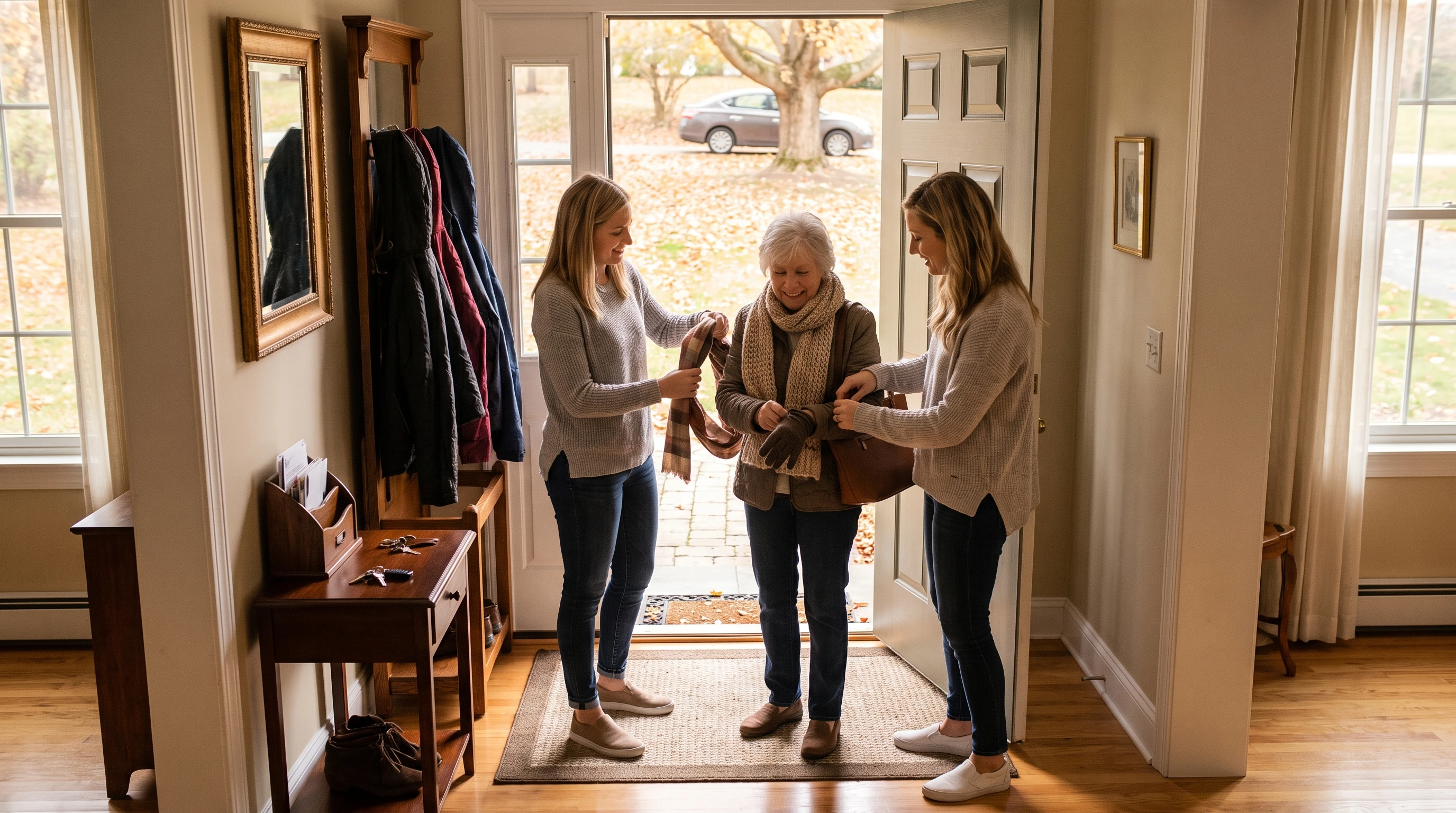
When your parent stops driving, their world gets smaller. A ride is how it keeps its shape.
In a lot of houses, the car keys are still hanging on the hook by the back door. Nobody moved them after your mom or dad stopped driving, maybe because moving them would have made it official.
What went away with those keys wasn’t really the car. It was the standing hair appointment, the Tuesday lunch with the old neighbors, the grandkid’s game on a Saturday morning, and the slow drive around the lake in October just to see the changing of seasons. Doctor visits usually still happen, because somebody makes sure of it. It’s everything else that quietly falls off the calendar.
A long time to be a passenger
We tend to picture giving up the car as something that happens near the very end. For most people, it comes much earlier than that.
Researchers writing in the American Journal of Public Health estimated that people in their early seventies can expect to live years past the point when they stop driving: about seven years for men and about ten for women. For many women, that’s a decade of depending on someone else for every trip out of the house.
What happens during those years matters. A team at Columbia University reviewed sixteen studies of older drivers and found that stopping driving was linked to nearly double the risk of depressive symptoms, along with social circles that shrank by about half. The researchers described driving as more than a way to get around, calling it a matter of “self-control, personal freedom, and independence.”
I’d be careful with that finding. It looked at people who stopped driving, not at what happens when someone gets a good ride instead, so it can’t tell us what a ride does. What it does tell us is what’s at stake when the trips stop.
Why it gets harder right about now
In Minnesota, all of this gets harder in the fall. It’s dark by suppertime, the first ice shows up in clinic parking lots, and a parent who was comfortable driving to church in July starts finding reasons to stay home.
For families, that usually means one of you leaving work early for every appointment, or a neighbor who helps as often as they can. Both come from love, and neither one covers a Tuesday lunch or a haircut. So the trips that aren’t urgent are the first to go, even though they’re the trips that make a week feel like a life.
The part families don’t think to ask about
When families first sit down with us, they ask about bathing, meals and medications. Almost nobody asks about rides, and I understand why. A ride doesn’t sound like care.
I’m not raising it because it’s impressive. I’m raising it because most families don’t know it’s something they can ask for, and for a lot of the people we care for, it’s what keeps them out in the world.
Our caregivers use their own vehicles and drive your loved one wherever the week calls for. Doctor visits are part of it, of course, and so is getting there early, getting settled, and getting home again without anyone rushing. But the list doesn’t stop at the clinic. Our team has driven clients to hair appointments, to a grandchild’s game and on long drives around the lake.
Keeping the same caregiver matters here too. Someone who drives your parent every week learns which clinic entrance is closest, which seat is easiest to get into, and that the long way home past the water is part of the trip. It’s also why we don’t rotate caregivers without a clear reason.
All the way to Arizona
Sometimes a ride goes a lot farther than the lake. With aging parents comes a particular kind of worry. You wonder whether they can still handle the roads, let alone an airport parking lot, a security checkpoint, or the move from a wheelchair into an airplane seat.
For a couple we currently care for, that’s exactly where I came in. Their daughter had just bought a new house in Arizona and invited her mom and dad to come stay for a month. I picked them up at their condo, drove them to the airport, and helped them through security and onto the plane. Once we landed, I handled the luggage and worked out with their daughter where she should pick us up. They were gracious enough to have me stay two nights at the house before I flew back to MSP.
A month later, I returned to Arizona, kept the airport routine exactly the same, and got them home to their condo in Minneapolis.
When winter comes
Snow and ice aren’t a reason for us to stop. They’re a reason to plan more carefully, and when the roads turn, safety decides everything. We’ll go to whatever lengths it takes to get your loved one where they need to be and back home again.
That matters most in the months when it would be easiest for your parent to stay home. A trip to the grocery store in January can be the one time all week they’re out among people, and it’s worth doing right.
If the keys are still on the hook
You don’t have to take them down. Your parent can still go to the places that make the week theirs, like the chair at the salon, the bleachers and the long way home past the lake.
The keys can stay on the hook.
If you’d like to talk about what getting out could look like for your mom or dad, I’m glad to sit down with you both. You’ll reach me directly, not a call center.
Sources referenced:
Foley et al.
“Driving Life Expectancy of Persons Aged 70 Years and Older in the United States”
American Journal of Public Health, 2002Chihuri et al.
“Driving Cessation and Health Outcomes in Older Adults”
Journal of the American Geriatrics Society, 2016Columbia University Mailman School of Public Health
“Health Goes Downhill When Older Adults Stop Driving”
2016
Stephen Thorkildson
Owner, No Place Like Home
Stephen Thorkildson is the owner of No Place Like Home, an in-home care company serving the greater Twin Cities. Over nine years in home care he and his caregivers have supported hundreds of families.